What if the reality we experience is only part of what exists?
The World We Share
The same world can feel completely different to different people. Two people can witness the same event, hear the same words, or walk down the same road, yet notice and experience very different things. The event itself may not change, but what it means to each person can.
Think about people walking down the same road. An architect may notice the buildings and their design. A mother walking with her child may be more aware of the vehicles around them. Someone who recently experienced a robbery may keep looking around for possible threats. They are all walking through the same physical environment, but each person is paying attention to something different because of their experiences, memories, knowledge, interests, and priorities.
And it is not only our experience that changes; the world around us is changing too. A river can change its course, flood, dry up, or disappear. At the same time, what that river means to us can also change. One person may see drinking water, another may see something sacred, a geologist may see erosion, while an economist may see a valuable resource.
So what we observe is interesting: there may be a physical world that we share, but we do not necessarily experience that world in the same way. What reaches us, what catches our attention, and what meaning we give to it are all influenced by the observer.
The world we share is not observed, felt, and experienced in the same way. One way of looking at this is to ask: what if the reality we call “reality” exists at different levels? There is the physical reality that exists outside us, the psychological reality created through our experience of it, and perhaps something deeper that we have not yet understood.
Our senses give us access to the physical world, but what reaches our conscious experience is already processed. The mind then interprets that experience through memories, beliefs, conditioning, emotions, and previous experiences. What we finally call “reality” may therefore be only a portion of what actually exists. This raises a deeper question: are we observing reality itself, or only the part of reality that our senses and minds are capable of receiving and interpreting? Perhaps the most interesting part of this exploration begins here.
One World, Different Realities
Every person experiences reality through the lens of their own mind. The same event can be experienced, processed, understood, remembered, and responded to in entirely different ways. The external event may be the same, but the internal reality it creates is not.
This is because the human mind is not a camera that records reality exactly as it happens. It acts more like an interpreter. From early childhood, our experiences, relationships, conditioning, beliefs, memories, and biases gradually shape our internal world. As we grow, every new experience is filtered through this existing psychological reality, while those experiences further reinforce, challenge, or reshape it.
Biology also plays an important role. Every individual has different temperaments, sensitivities, stress responses, emotional regulation capacities, and neural connections. Attention, memory, thought processing, survival instincts, and hormones all influence how we perceive and respond to the world.
Even from an evolutionary perspective, the brain evolved primarily to help us survive and adapt. It constantly filters, prioritizes, and processes information based on what it considers most relevant. So, although two people may face the same external situation, they never meet it with the same internal world. We do not experience events merely as they are; we experience what those events mean to us.
If Perception Differs, What Is Reality?
The mind is not a camera that records reality exactly as it is. Even before the mind begins interpreting reality psychologically, it has already filtered an enormous amount of information. Our senses receive far more information than our conscious mind can process.
This raises a deeper question: Are we inherently limited in our ability to perceive reality as it is? If our perception is already incomplete before psychological interpretation begins, then perhaps the limitation is much deeper than conditioning, beliefs, or past experiences. Maybe perception itself is incomplete.
Consider a mirror. We look into a mirror and see ourselves. We may notice our face, our expressions, or changes in our appearance. But the mirror does not show us everything that exists about us. It reflects only what falls within its surface and the particular angle from which we are looking. Similarly, perhaps our senses and mind are also instruments through which reality is revealed to us. They give us access to something real, but not necessarily to its entirety.
The question then becomes: what exists beyond what the instrument allows us to perceive? This takes us beyond the object of perception itself. If every physical object we experience exists within space, perhaps we spend most of our lives studying the objects while rarely asking about the space that allows those objects to exist in the first place.
What about space itself? Does space undergo change in the same way physical objects do? Can emptiness itself be experienced? And if it can be experienced, how would we understand its nature without immediately trying to define it through the mind? This is where contemplative traditions are particularly intriguing. Some traditions speak of Śūnya, or emptiness. But perhaps emptiness here does not simply mean the absence of something. Could it point towards something beyond the objects, names, and forms through which we normally experience reality?
Could there be a dimension of reality that exists beyond the mental constructs through which we try to understand it? We don’t know the answer. But the question itself seems important. Perhaps our inability to perceive reality completely is not necessarily a failure of reality, but a limitation of the instrument through which we are trying to understand it.
Where Psychology Meets Philosophy
Psychology and neuroscience help explain how we experience reality, while philosophy and contemplative traditions ask what reality ultimately is. The interesting conversation begins where these perspectives meet rather than compete.
From a psychological perspective, reality is filtered through the observer. Our memories, emotions, beliefs, conditioning, biology, expectations, and previous experiences influence what we notice and how we interpret it. Even before interpretation begins, the brain filters and prioritizes enormous amounts of information. Our conscious experience is therefore only a portion of the information available to us.
This is where psychology begins to meet philosophy. If our perception is inherently limited, can we ever know reality as it truly is? We may be products of nature, but that does not necessarily mean we are capable of understanding nature in its entirety. Like a telescope that reveals only the portion of the universe it can observe, perhaps the human mind also allows us to experience only what its capacity permits.
Philosophy and contemplative traditions take this question further by asking whether something exists beyond our changing perceptions, thoughts, identities, and interpretations. Science can study the biological and neurological processes associated with experience, but whether subjective experience itself can ever be measured objectively remains a question.
Perhaps our models of reality will always be incomplete. The challenge, then, is understanding when these models help us understand reality and when they themselves become a limitation.
Beyond What We Can Know
The more we think about this, the more we realise that the search for reality may create more questions than answers. If perception is always filtered, can we ever experience reality without the filter? If the mind is the instrument through which we understand reality, can it understand something beyond its own limitations?
Can the mind observe itself without creating another interpretation? Can awareness exist without interpretation? If everything we perceive through our senses is changing, is there something that does not change? And if such an unchanging reality exists, can it be experienced rather than merely conceptualised?
This is where the distinction between knowing about reality and experiencing reality becomes important to me. We can study the brain, observe neural activity, and understand how the mind constructs our experience. But understanding the process through which experience happens may still be different from directly knowing the nature of experience itself.
Contemplative traditions approach this differently. Rather than trying to understand reality only through thought, they explore whether the mind can become sufficiently still for reality to be experienced without the usual layers of interpretation. Perhaps this is what experiences described as Samadhi are pointing towards, not another concept about reality, but the possibility of experiencing something beyond the ordinary functioning of the mind.
Yet even such an experience creates another question. The moment we try to communicate it, we have to use language, and language itself becomes another layer of interpretation. So perhaps the question is not simply whether we can know reality objectively.
Perhaps we need to ask whether we can move from knowing about reality to experiencing reality. And perhaps the deeper exploration is not about finding the perfect framework for reality, but examining the one who is trying to understand it. If the observer is part of the reality being observed, then understanding reality may ultimately require us to understand the observer itself. And perhaps that is where the real exploration begins.
Acknowledgement
This article is a collaborative exploration between my friend Sharath and me, bringing together our individual thoughts, questions, and perspectives on reality, perception, and the human experience. The article is shaped equally by both of our viewpoints, with each of us approaching these questions from our own experiences and ways of thinking.
I would like to acknowledge and appreciate the thought, curiosity, and effort he brought into this collaboration. It was a meaningful experience putting these thoughts together.I wish him all the best for everything ahead.
In my previous article, I discussed the abstract concepts that humans have created for survival and as part of our evolution. There are countless such concepts, and together they form the frameworks through which we collectively understand reality. But reality does not affect only humanity as a whole. It is also experienced differently by every individual. So now, let us explore reality at the personal level.
The Psychological Phenomenon
Every person on this planet sees reality through the lens of their own mind. The same event can be experienced, processed, understood, remembered, and responded to in entirely different ways by different people. The external event may be the same, but the internal reality it creates is not.
Consider childhood trauma. Two people may go through similar painful experiences, yet those experiences may shape them very differently. One person may eventually confront the trauma, seek support, understand its influence, and build a peaceful and fulfilling life. Another may continue carrying its effects for many years, struggling to escape the emotional patterns created by the experience.
Some people transform their pain into empathy. Because they understand suffering, they become compassionate leaders, caregivers, activists, or sources of support for others experiencing similar difficulties. Their pain becomes part of the reason they want to protect and help people.
Others may respond by becoming emotionally withdrawn, distrustful, controlling, aggressive, or harmful. They may reproduce the very pain they once experienced. This does not mean that trauma automatically creates either compassionate people or cruel people. It means that the same kind of suffering can interact differently with each person’s biology, environment, relationships, opportunities, coping mechanisms, and interpretation of what happened.
Because the human mind is not a camera that records reality exactly as it happens. It is more like an interpreter. It receives incomplete information from the outside world and combines it with memories, expectations, emotions, beliefs, opinions, bodily reactions, conditioning, and previous experiences to decide what the situation means. So, although two people may face the same external event, they never meet that event with the same internal world.
For example, imagine two employees receiving criticism from their manager.
One thinks: “This is uncomfortable, but it will help me improve.”
The other thinks: “I am being humiliated. I am going to lose my job. I am not good enough.”
The manager may have said exactly the same words to both people. But one person experiences feedback, while the other experiences rejection or danger. The difference may come from their histories. Perhaps the second person grew up with a highly critical parent, was frequently punished for mistakes, or learned that love and security depended on performing perfectly. The present event activates meanings created by the past. This is why people often do not react only to what is happening now. They also react to everything the present situation reminds their past of. So two people can be experiencing the same situation, perhaps externally. But psychologically, they are not. We do not experience events merely as they are. We experience what those events mean to us.
Behind the Science
Biologically, each individual differs from others. People have different temperaments, sensitivities, stress responses, emotional regulation capacities, and levels of impulsivity. One person’s nervous system may return to calm relatively quickly after a frightening event. Another person’s body may remain in a heightened state of alert. They may continue feeling unsafe even after the immediate danger has passed.
Neural connections and brain structures also matter because each person’s brain develops a unique network of neural connections through genetics, development, learning, and lived experience. Different brain regions like the amygdala, Hippocampus, Prefrontal cortex, etc., constantly communicate with each other. If one system becomes more reactive because of genetics, chronic stress, or past experiences, the person may genuinely experience the world differently.
Different functions of the brain, like attention, memory, thought processing, survival instincts, and the release of hormones by the human body, all affect the way we perceive reality. All this clearly shows that the brain is not a passive receiver of reality but an active constructor of experience based on incoming sensory information and prior knowledge.
Modern neuroscience says something similar. It suggests that the brain is an active prediction and interpretation machine. It constantly combines sensory information, memories, emotions, expectations, attention, and previous learning to construct your conscious experience. This means that perception is not just “seeing what is there.” It is the brain’s best interpretation of incomplete information.
We indeed perceive reality through the limited capacity of the mind. From an evolutionary perspective, any living being’s main objective on this planet is survival and reproduction, including human beings, and the human brain has evolved to help us survive and adapt to our environment. As a result, out of the enormous amount of information constantly available around us, the brain filters, prioritizes, and processes only what it considers most relevant at that moment.
For example, imagine people walking down the same road. An architect may immediately notice the design of the buildings; a mother would be extra careful of the vehicles while walking with her child; and someone who has experienced a recent robbery may instinctively scan the surroundings for potential threats. The physical environment is identical for all three individuals, yet each person’s brain selects different information based on their knowledge, experiences, memories, interests, and current priorities. This clearly shows that our brain continuously decides what deserves our attention and what can be ignored based on what our brains consider most relevant for survival, adaptation, and the goals we are pursuing. I believe Subjective experience is different for each person, and it is based on a combination and permutations of millions of factors.
But if people experience reality differently, another question naturally follows.
Why does the same adversity strengthen one person while overwhelming another? One interesting framework for understanding this comes from Nassim Nicholas Taleb’s concept of antifragility.
The Concept of Antifragility
Nassim Nicholas Taleb, a former trader, statistician, philosopher, and author, introduced the antifragility concept in his 2012 book, Antifragile: Things That Gain from Disorder. The concept is simple: He realized that there was a word for things that break under stress (fragile) and a word for things that resist stress (robust or resilient), but there was no word for things that actually become better because of stress. So he invented the word antifragile.
Imagine a glass cup. Drop it. It breaks. Taleb called this fragile. Now imagine a rock. Kick it. Nothing happens. The rock survives. Taleb calls this robust. Now imagine going to the gym. When you lift weights, something strange happens. The exercise slightly damages your muscles. Your body repairs them. The repaired muscles become stronger than before. That is antifragility. These phrases were created later by readers, coaches, motivational speakers, and psychologists trying to apply his idea to biology, psychology, and human behaviour.
Suppose three people lost their relationship because of X reasons. Person A becomes depressed for years, may eventually shut down emotions and stop trusting people. Person B casually enters another relationship with approximately the same emotional openness and behavioural patterns as before. The experience neither permanently damages nor meaningfully strengthens them. Person C learns the lesson, works on themselves, makes an effort to heal themselves, and finds love again without repeating the patterns.
The same stress produced different outcomes. Person A behaved in a fragile way, Person B behaved in a robust way, and Person C behaved in an antifragile way. Different systems have different responses to volatility. The event is identical. Only the system processing the event differs.
Now, if we understand the context of reality under the same concept, Reality is not experienced directly. Reality is filtered through the structure of the observer. A fragile observer constructs one reality. A robust observer constructs another. An antifragile observer constructs yet another.
The Nature of Reality
This is a very interesting question because this is where the definition of reality kicks in. Reality is the totality of everything that exists, occurs, or has existence, independent of whether it is perceived, understood, or believed. Based on this, we can broadly divide reality into objective reality and subjective reality.
For example, let us take a river; a river is a physical body that is present and flowing irrespective of what we say. That is objective reality, because it exists independently of human interaction. But in many traditions, humans have worshipped rivers for the benefits, value, and dependence we have on rivers like the Ganga River in India and the Nile River in ancient Egypt. The rivers are still the same, but humans interpreted them as sacred manifestations or deities because of their purity and the civilizational ecosystem built around those rivers. This is subjective reality. This is purely based on how we interpret the existing water bodies and attach meaning to them. This subjective reality differs from person to person.
The interesting thing is, this points out to the discussion above that the physical world and internal world are ever-changing. Because a river might dry up or change direction. The subjective perception of the river regarding its importance might also change with time; also, the meaning attached to it might also change inside a person’s natural process of upgrading worldview perception based on his circumstances. So I feel the reality is that nothing is permanent, whether it is objective or subjective.
The Limits of Perception
As I said in my articles regarding abstract concepts that humans have created, humans have created so many illusions around us that it is hard for us to see reality, but not impossible. I believe we can achieve a state of self-awareness about subjective experiences and objective reality; we can understand the nature of reality, even if not reality directly.
When speaking about contemplative traditions, Buddhism also says something similar to what I said before: 1. Reality is impermanent (Anicca). 2. There is no permanent self (Anatta). Buddhism also talks about an interesting concept: ‘Reality is interdependent’. For example, A flower depends on sunlight, water, soil, insects, time, climate, and evolution. Without those, there is no flower. This implies that Reality is Dependent on Cause and Effect; I believe this is an interesting way to look at it.
Beyond Perception
This is a very interesting question. Human beings have always been not only curious creatures but also good at understanding patterns, connecting dots, and finding solutions that benefited us in thriving.
Before it was discovered that the Earth is round, people used to think that the Earth might be flat or that the Sun revolves around the Earth rather than the other way around. Did we ever perceive it through our senses like vision, smell, touch, etc? No. We only came to know the reality of those celestial bodies after actually perceiving them through observations, patterns, and using scientific tools. Then, before the invention of these tools, how did we come to conclusions? Because the human mind is curious and always searches for answers. If we cannot find an answer, we try to make an explanation and create meaning through our imagination. Imagination is the act or power of forming a mental image of something that might not be physically present to the senses. So, yes, I believe we always try to understand and explore reality even without perceiving it through our rare cognitive abilities that we developed during evolution.
Conclusion
In my previous article, based on abstract concepts humans created, I wrote that because of all these illusions and frameworks we have created, we may or may not ever see reality. One of my philosopher friends left a beautiful comment that completely shifted my perspective. He wrote, “Even though humans invented these abstractions, humans themselves are products of nature. Therefore, whatever humans create can be attributed to nature.”
That simple observation stayed with me for a long time. I had been treating nature and human abstraction as though they were separate, as if reality existed on one side and our interpretations existed on the other. But perhaps that distinction is artificial. If human beings are products of nature, then our capacity to create language, tell stories, imagine possibilities, construct meaning, and build abstract concepts is itself a natural phenomenon. Perhaps reality is not something hidden behind these lenses. Perhaps the emergence of minds capable of creating abstractions is itself an expression of reality.
Have you ever wondered, ‘What is reality?’Reality can be defined as whatever exists independently of what we wish or believe, or our subjective experience of interacting with it. Can humans ever truly see reality as it is, without relying on abstract concepts?
The question arises because human abstract concepts highly impact how we see reality. Abstract concepts are deeper, more interesting, and play a major role in our lives than we realize. An abstract concept can be understood as a set of mental frameworks, labels, and interpretations we created for survival and understanding. For example, some abstract concepts that are widely accepted include money, time, religion, nations, borders, morality, beauty, and even love. The foundation for any of these abstract concepts is, I believe, language.
To understand abstract concepts, we need to understand the importance of LANGUAGE because that is where it all started. Language is the most important tool humans have created, and it influences our lives more than we realize. It not only enables us to communicate, move from place to place, survive, and invent, but it is also the primary tool we use to think about our thoughts. I wonder whether there is anything we can think beyond the language we know. Even if there are feelings or thoughts I experience, I cannot express them beyond the capability or limitations of language. So language not only helps us in external communication, but also acts as a basis for our internal communication, without which it would be impossible to even align our cognitive processes.
Now let us see some of the concepts that I believe can be considered abstract.
WISDOM. The last time I had a discussion with my friends, I observed that every person at the table had a different opinion on certain aspects of wisdom. That is when I realised that wisdom is one of the abstract concepts created by humans. There is no physical object in nature called “wisdom” that exists independently, and it is not directly quantifiable. Humans observe certain behaviors, patterns, and outcomes, and then create a concept to describe them. Language, as I said, compresses complex experiences into labels, and “wisdom” is one of those labels. Societies observe that certain ways of thinking or acting tend to lead to better outcomes, and then they call those patterns “wise.”
Similarly, I believe SCIENCE is also an abstract concept. There are thousands of theories that exist that have not been proved, and hundreds that have been proved. We never truly know whether they are absolutely true or false; some are simply accepted, and others are not. I once read in a book in which the author says that NASA is sending rockets into space using the theories of people who could prove their ideas using their social skills, while others with equally valuable ideas may have remained unheard because they lacked the ability to convince society. Whether this statement is entirely true or not, it raises an interesting point: human knowledge is not shaped purely by objective truth, but also by communication, influence, acceptance, and collective agreement.
When I was in school, my maths teacher always used to say, “Mathematics is not invented; it was discovered.” That sentence always felt mysterious to me. But eventually, I began to understand that mathematics is something humans discovered through the pattern-recognition, meaning-making, and dot-connecting abilities we possess. Mathematics, Physics, Biology, any subject you name, the fundamental foundation of these branches of science lies in observation, thinking, and the cognitive abilities that humans developed through the process of evolution.
Language itself is something we created, and all scientific terms are human-made constructs. We collectively agree on how the universe, the planets, and the science behind them work based on what we have discovered, but the universe is not something small enough that we can fully measure and define through evidence alone. Just because something is working does not necessarily mean it is ultimately true. Humans often imagine and create frameworks that are convenient to them and accept them as long as they are useful.
Science, in itself, is a tool that we use to understand the Universe; it is not the Universe itself. We created science for our convenience, and because it works for us, it continues to be used, but that does not automatically make it the absolute truth. We are living our lives entirely based on systems like earning, paying, and exchanging money, using it as a functional tool, but that does not necessarily mean that money is “real” in a physical sense.
Similarly, I believe Science is also not the ultimate truth. This planet and the universe are far older than the scientific models we currently have. Science is a method humans developed to model, predict, and explain observations. Scientific theories are representations, not reality itself. For example, gravity is real as an observable phenomenon, but the models explaining it have changed over time. Isaac Newton described gravity one way, and Albert Einstein later described it differently through relativity. Both models worked within certain conditions, even though one later proved more accurate than the other.
This illustrates an important point: science often progresses not by finding absolute truth, but by creating models that explain observations better than previous models. In fact, one of the foundations of modern science is the idea that any theory could potentially be wrong if better evidence appears later. So even if science appears to progressively approach objective reality, it may still remain within the limits of human interpretation and may never fully escape the subjectivity required to understand reality “as it is.” At the same time, if you step off a cliff believing gravity doesn’t exist, you’ll regret the decision. So I’d say science may not be the “absolute truth,” but it is the most reliable method we have for approximating reality.
One more interesting concept that fascinates me is CONSCIOUSNESS, and I believe this is also an abstract concept that humans have created. Consciousness is a multifaceted concept that encompasses awareness, self-reflection, and the ability to engage with the world. These are the cognitive capabilities that humans have adapted over time through evolution. We collected a set of capabilities that we got during the evolution and termed them as Consciousness, which has no physical proof or quantifiable. We analyse our own actions, like I shouldn’t have taken that decision, I made a mistake, etc., and call it consciousness, while it is simply a process in our brain. Again, isn’t it useful? Yes, of course, it is useful, so is the concept of time; it is useful to us in every possible way, but that does not make it real.
Now comes the biggest question I have had all my life. I keep asking people, and I keep thinking deeply about it: What is life? I realised that LIFE itself may also be an abstract concept without us fully realising it. For billions of years, countless organisms have existed on this planet and disappeared. All of these organisms, including us, are ultimately made of cosmic dust. We are all reactions within the larger processes of the Universe.
Our existence itself is a collection of processes: breathing, functioning, moving from one place to another, and surviving. From the micro level to the macro level, countless processes are constantly happening around us and within us every single day, including our physical capabilities and mental processes. Maybe humans simply observed this complex collection of processes and gave it a name: “Life.”
Our bodies are physical and measurable, of course, but where exactly is “life”? Is life something objectively real, or is it a conceptual framework created inside the human mind? Did humans create the concept of life as a way to understand existence and survive evolution more effectively? Life is a complex, dynamic phenomenon defined by a combination of biological functions (like metabolism, energy transformation, growth, reproduction, and responsiveness to the environment), organization, and evolutionary potential, making it both a scientific and philosophical concept.
One of my friends, during our last discussion, said that he believes we might all be part of a game or simulation created by some higher intelligence, and that we simply do not recognize it. But I personally do not believe in this concept, and the reason is this: there might definitely be a higher intelligence somewhere in the universe, and that intelligence may or may not know about our existence, but I do not think we are a simulation because I believe life is simply the ongoing process of reaction, experience, change, awareness, relation, and becoming.
These processes are just unfolding on this planet, which itself is only a tiny part of this massive universe. Humans observed these processes, gave them a structure, organized them, and eventually named them “life.” We then made life appear more certain by turning it into a socially accepted cycle: birth, education, employment or business, marriage, children, old age, and death.
But whether life is an abstract concept or not, one thing is clear: we are all here, and we know that we are here. So in the end, we seem to have only two choices: either live through it or end it. Most of us do not truly want to end it, so why not simply live it? Why not live with a little more happiness instead of constantly stressing over things that are not working out? Why spend every day crying over something that was never truly ours? Why worry endlessly about every single thing?
When we begin to understand that nothing is permanent and that life itself is a reaction, a process that will someday end on its own, many things stop feeling as heavy as they once did. Even negative emotions and thoughts begin to lose some of their power.
If we remove all these concepts, what else remains? So is it ever possible for us to see reality as it is? Maybe or maybe not.
For many years, the greatest philosophers have been debating about the concept of Free will. Does Free will exist? If yes, then to what extent does it exist? If not, then what is the meaning of this life? To understand whether free will exists or not, we first need to understand what free will actually is. Free will can be generally defined as: ‘be the ultimate source or originator of their actions’, or ‘the power of acting without the constraint of necessity or fate’ (according to Oxford dictionary), or ‘choose between different possible courses of action.’
CAUSE AND EFFECT THEORY:
According to the Big Bang theory, the Universe began about 13.8 billion years ago from an extremely hot, dense state. It rapidly expanded and cooled, allowing matter to form over time. As the Universe continued to evolve, gravity pulled matter together to form galaxies, stars, and eventually planetary systems, including our own Solar System.
Life on Earth began billions of years ago with a single-celled organism, and over an unimaginably long span of time, it gradually evolved into the complex forms of life we see today. Eventually, through continuous biological evolution, humans emerged. Across thousands of generations, human ancestors endured extreme hardships: harsh environmental conditions, threats from wild animals, diseases, natural disasters, famines, and wars. At every stage of this long chain, countless lives were lost. Now consider this: if even one of your great-great-grandfathers or ancestors had died due to disease, starvation, accident, or war, the entire chain leading to your existence would have been broken. In that case, you would not exist today.
When thousands of sperm cells are released, they all compete in a race toward the egg. Yet only one succeeds in fertilizing it. That single successful sperm determines the beginning of a unique human life ‘you’. If a different sperm had reached the egg instead, a completely different individual would have been formed. That person would have had different genetic traits, personality tendencies, behaviors, and life experiences. In essence, a completely different “you” would have existed.
This is where the cause-and-effect theory comes in. Everything that has happened has a cause from the previous moment and an effect that leads to consequences in the future moment. There is almost nothing in this world that has happened without cause and effect. Now let us go back to the definition of free-will that we discussed in the beginning ‘be the ultimate source or originator of their actions’. If everything from the origin to the end of life is based on cause and effect, patterns and cycles (I have discussed this in my previous article: The Eternal Cycle, please go through it), how can a person be the ultimate source or originator of their actions? So this definition itself is a paradox for free will.
RIPPLE EFFECT AND DOMINO EFFECT:
The ripple effect is the phenomenon where a single event or action creates a series of indirect, expanding consequences that spread outward over time and across different areas. The domino effect is a chain reaction in which one event directly triggers a sequence of similar or connected events, each one causing the next in a linear progression. Both these models fundamentally help us not only to understand the patterns and chain reactions but also to understand free will.
A war breaks out on the other side of the world, driven by the political and economic agendas of powerful leaders. As a result, global oil and energy prices rise, stock markets begin to fall, and economic instability spreads across countries. Far away from this conflict, a man sits in another corner of the world, completely disconnected from the war itself. He has no involvement in it, no influence over it, and no role in the decisions that caused it. Yet, despite this, the consequences eventually reach him. His company begins to struggle under rising costs and financial pressure. Unable to sustain salaries and operations, the company is forced to lay him off. Suddenly, the man loses his job. He now finds himself worried about how he will support his family, pay his bills, and secure his future. He did not participate in the war, he did not make any economic decisions, and he did nothing that directly led to this outcome, yet he still suffers its consequences.
This raises a profound question: Where, in this chain of events, is free will?
Let us take another example, A person born on one side of Korea can have a good education, eat good food, doesn’t have to worry about survival, get married, have kids, lead a good life, and die. But a person born just a few kilometers away on the other side of Korea will have to suffer their entire life, eating good food is a dream, getting good sleep is a luxury, every day is a survival quest, and they cannot even have their own haircut. Again, doesn’t this raise the question about free will? Every person’s habits, way of life, choices, character, thoughts, behaviour, actions, interests, personality, appearances, and everything is based on the place they were born, who their parents or family are, what religion they are, what conditions they grew up around, and what are the experiences they have seen in their life.
I had an interesting argument with my friends about free will a few days back. When I asked them the same question above, one of them explained that free will still exists in a country where survival is hard. Even within the limited options they have, for example, within the limited options of haircuts they have, they still get to choose which one they want to have, which is again free will for them. Because we are living somewhere else and have more freedom than them, we are viewing free will as something they don’t have. But if we see from their perspective, they have free will in their mind, even within that small bubble, and they get to decide what they want to do with it, which is free will. The argument he gave is interesting, but if you look at a deeper level, free will inherently means “the power of acting without the constraint of necessity or fate.” If the choice they are making is under the constraint of necessity or fate, within the limited options provided to them, it is not free will anymore. His interpretation of free will does not align with the widely accepted definition of free will.
Then I said, I bought an iPhone because it has a status symbol. I was told or influenced that this phone is cool and unique; otherwise, I wouldn’t have bought it. I would have bought a different phone. I came to Dubai because I was influenced to believe that Dubai has good opportunities in terms of career and a better lifestyle, so coming to Dubai was not purely my choice; it was influenced. Everything we choose to do is basically because of the influence of other people, society, our past experiences, and all the other reasons I have already mentioned. One thing affects another and leads to something else, just like a ripple effect and domino effect, and ultimately, we make a choice based on these influences. One of my friends said that yes, somebody might have told me that the iPhone is cool and has a status symbol, but there was still an option for me whether to buy it or not, and I chose to buy it. Nobody forced me to buy it. I could have still bought Samsung, but I did not because clearly I had a choice. I have come to Dubai because I was told or influenced that it has good opportunities, but I still could have gone to any other country, and I did not. I still chose to come to Dubai because I have free will. Basically, he was talking from the perspective of one of the definitions of free will that we read earlier: “choosing between different possible courses of action.”
Yes, even though I was sold a story, influenced, or persuaded, I still had the option to buy any other phone, go to another store looking only for iPhones, or buy online. Let us say I chose to buy Samsung instead. That doesn’t necessarily erase my fundamental desire to look cool or own a status symbol, right? My desire to own a unique phone with good features is still the same; only the product has changed. And the product I chose would ultimately still be influenced by family, friends, my affordability, and my idea of what kind of phone I want. I will explain with a simple example. Let us say I went to a fruit market to buy apples because I thought I should eat some healthy food. There were no apples in the store, so I decided to buy strawberries. You might say I had the option to buy strawberries or come back empty-handed, and I still chose to buy them; that is my free will. But I would say even that decision to buy strawberries was influenced by my previous thought of buying fruits and eating healthy. My fundamental thought of health consciousness did not change; only the product changed, and that product choice is still influenced. Why did I not buy bananas or kiwi? Because again, it depends on taste, preferences, affordability, availability, and many external factors. Similarly, with the Dubai example, I still chose Dubai. Yes, I could have gone to any other place, but doesn’t that evidently show that I actually chose the option that I was most influenced toward, compared to other options?
All companies and brands market their products in such a way that they influence our choices. They study human psychology, create value in our minds even when we don’t need it, and make us buy things. Even the chips packet we buy, the taste, the crispiness, the sound it makes when we are eating it, its packaging, everything is carefully studied, analysed, experimented with, and manufactured. All these companies shape our behaviour into buying things which we believe we are buying out of our own will, but in reality, we are only being influenced. The way we should dress, the way we should, the apparel, the jewellery, our holiday trips, everything is influenced. Alcohol, smoking, and drugs are never a choice. Nobody starts drinking or smoking willingly, but we were all brainwashed to believe that we are doing it by choice. When I’m talking about not having free will, it necessarily doesn’t have to be coercive, or that we are being controlled; it could even be influence, persuasion, or brainwashing.
THE ILLUSION
Humans are the only animals on this planet who can collectively agree on imagined concepts such as money, nations, borders, marriage, and legal systems, assign value to them, and organize their lives around them. We have created a world structured by morals and responsibilities, systems that may be abstract or constructed, yet they exist because we need a framework to live together in an organized society. If there were no concept of money, perhaps I would go wherever I want, travel freely across the world, and not feel the need to work, earn, save, and then travel. I would simply do what I want and go wherever I wish.
To this, one of my friends countered by saying: If you do not earn money, how will you move from one place to another? If you want to travel by ship, for example, you first need a ship, someone to operate it, fuel, and many other resources. Either you must put in all the effort yourself, or someone else will do it for you, and in that case, you must pay for it. That is why money exists, and that is why you need to work to earn it.
Interestingly, his argument actually supports my point. That is exactly what I am trying to say. To travel from one place to another, I either need to put in all the effort myself or pay someone else to do it. But I cannot realistically put in all the effort myself; I do not know how to build a ship, I do not know how to sail, and I lack knowledge about fuel, navigation, and many other technical aspects. All of these are prior conditions and limitations. As a result, I am compelled to choose the alternative: paying money. But to pay money, I must earn it, which requires working and saving. Each step is not an isolated choice, but part of a chain of causes and effects.
Hence, we can see that everything is interconnected, and every decision we make is embedded within a larger system of constraints, influences, and dependencies. We have created so many illusory systems around us and progressed so far within them that we are now required to live according to these constraints, whether we like it or not. Everybody says that we can choose what we want to do and how we want to live, but how many of us actually live that way? Even humans have come to accept that this is what life is, and we have limited ourselves to believing that we are living according to our own will. But in reality, we are living under systems that want us to believe that we are free.
Then one of my friends raised an important question: what about people who commit crimes or do harm to society? A person who has committed a murder could easily say, “I did not do it out of my own choice; I did it because of my circumstances, external factors, and other influences. So why should I be punished if I was compelled?” This is where we need to draw a distinction. Yes, various factors may have influenced his actions. However, because the act is harmful to society, consequences are necessary; the person needs to be punished so that he will not repeat it again, or someone else will not repeat it after him. There must be consequences for actions. These consequences, in turn, are part of the structured systems we have created: laws, rules, and social frameworks, which, although constructed, play a crucial role in maintaining order. And once again, these systems influence our lives in significant ways. If there is a cause that leads a person to commit a crime, the act itself becomes the effect. And in response to that act, legal punishment becomes another effect within the same chain of causation. Humans are social animals who live in harmony, and if anybody disrupts the harmony with bad intentions should be punished for the survival and for the sake of a better society. ‘Accountability matters for the collective stability.’
INTERNAL AGENCY:
The human brain can be broadly understood in terms of conscious and subconscious processes, where 95% of the decisions we make are taken by the subconscious part. It acts as an “autopilot” for routine, behaviours, habits, and emotional responses, processing information and influencing decisions before the conscious mind is aware. Only 5% of the decisions are taken by our conscious mind at the cognitive level. Our organs, like the heart, lungs, and liver, and the blood flow, keep functioning without us having to think about them, as an automated process carried out by our subconscious mind. In a similar way, our subconscious brain is constantly working in the background, shaping our thoughts, emotions, habits, and behaviours without our full awareness.
These subconscious patterns are built over time, through our past experiences, childhood conditioning, emotional experiences, and the values and norms of the society we grow up in. So, in many ways, what we think and how we act is already influenced before we even become aware of it. And also, the conscious mind does not create choices from nothing; it operates on options that are already influenced and filtered by the subconscious. We may feel like we are making a deliberate choice, but that choice is still coming from a system we did not consciously design. And this is where the question of free will becomes uncomfortable. If our thoughts, preferences, and decisions are being shaped by processes that we don’t consciously control, then how “free” are our choices really? What feels like a personal decision might actually be the result of a chain of influences and past experiences that were already in place before we even made the choice.
Another important factor in this internal process is genetics. The genes we inherit from our parents, grandparents, and ancestors play a major role in shaping who we are. Our character, personality, habits, lifestyle tendencies, physical appearance, and even certain behavioural patterns are influenced by this biological inheritance. We did not choose our genetics. We did not decide what traits we would carry, what tendencies we would have, or how our mind and body would be wired. These are all given to us even before we are born, becoming yet another layer that shapes our thoughts, behaviours, and decisions. So even at a biological level, what we consider as “us” is already influenced by factors beyond our control, further raising the question of how much of our actions can truly be called our own.
CONCLUSION
We often think that we have free will when we look at life from our individual perspective. It feels like we are the ones choosing, deciding, and controlling our direction. But if we zoom out and look at life from a larger perspective, this certainty starts to dissolve. We are not isolated beings making independent decisions; we are deeply interconnected systems, constantly shaped by forces within us and around us: our upbringing, biology, environment, society, and every experience we have gone through. Everything is layered, inter-aligned, and tangled in a continuous chain of causes and effects.
From this broader view, the idea of control becomes difficult to defend. A large part of what we call “choice” seems to emerge from conditions we did not create and cannot fully escape. This does not necessarily make life meaningless, but it does challenge the belief that we are fully independent authors of our actions. When we start to understand that every person, including ourselves, is shaped by circumstances, influences, and experiences beyond their control, the idea of blaming others or even blaming ourselves so harshly begins to feel less reasonable.
In the end, life may not be about absolute freedom or absolute control, but about an ongoing unfolding of causes and processes through us. And maybe the most honest way to live with this understanding is not through blame, judgment, or guilt, but with a clearer awareness that everyone is simply navigating the conditions they have been placed in, inside a system that is far bigger than any individual choice. And remember, you may not be the absolute author of your life… But you are still the place where life is unfolding. You still experience: making choices, thinking, reflecting, and improving as a part of your life. So life still feels like you’re participating in it. And maybe that’s enough.
1. THE PEACE YOU ARE LOOKING FOR IS INSIDE YOU. YOU JUST NEED TO BE ABLE TO SEE IT.
Probably this is one of the biggest lessons I have learned in my life.
For almost a decade, I was searching for peace everywhere. I searched for it in my family, my friends, and the person I loved. I was constantly struggling in my relationship, thinking it was my partner’s responsibility to give me peace.
I migrated to another country very desperately, believing that I would finally find peace there. I kept changing jobs, working double and sometimes triple shifts, thinking that if I earned more money, I would feel at peace. I moved again to another country, still hoping something would change.
But nothing changed.
No matter where I went or what I did, I could not find peace.
Little did I know, my peace was always inside me. I was never willing to see it. And the day I realized this, my life changed. Now I am at peace with myself. There may still be chaos in life, but inside, I am peaceful.
2.THERE ARE TWO KINDS OF PEOPLE IN THE WORLD.
Life is hard for everyone. Every person on this planet has their own problems.
Even though people deal with their problems differently, almost everyone falls into two broad categories.
The first group is those who, when life hits hard, give up. They convince themselves that this is what life is; they adjust, they compromise, they continue living like that, they just exist.
The second group is those who, when life hits hard, fight back. Even when they fall, they stand up again. They push against everything and try to shape their life according to their will.
These people are rare. These people are the fighters, the achievers. And most of the time, they are the ones who rise and lead.
Be in the second group.
3.BE WHERE YOU ARE AND WATCH EVERYTHING COME TO YOU.
One of the hardest things a human can do is to be where they are, not physically, but mentally.
If a person can remain still, no matter what is happening in life, whether it is good or bad, things begin to change.
Stay still, no matter what is happening around you or within you. Over time, you will start noticing that people and situations are constantly passing by.
In the beginning, you may not see it. But with time, it becomes clear.
When you learn to stay still, you will see that people who once ignored you may start coming towards you. You will notice people trying to hold on to you with their words and attention.
No matter how uncomfortable you feel, learn to stay where you are and keep doing what you need to do: your work, your routine, your responsibilities, lead your life.
The chaos will pass. And slowly, things will start aligning in your favor.
4.MASTERING SELF-DISCIPLINE IS ONE OF THE BIGGEST FAVOURS YOU CAN EVER DO TO YOURSELF.
To remain steady in life, discipline is necessary.
The human mind is unstable. It gets distracted, avoids difficult things, and constantly shifts.
Discipline helps you control that.
It gives you clarity. It builds confidence. It removes unnecessary distractions by keeping you focused on what matters. It protects you from chaos, keeps you healthy, and helps you stay consistent.
Most importantly, discipline helps you trust yourself.
When you stay disciplined even in difficult times, you start believing that you can handle anything. It gives you the strength to act, even when things are hard.
Over time, it changes your life, gives you success and brings you closer to peace.
5.LEARN TO LIVE ALONE.
Learning to live alone does not mean isolating yourself from everyone.
Humans are social beings. We need people in different ways.
But living alone means being able to stand on your own, no matter what.
Be happy even when you are alone. Learn to navigate your challenges by yourself. Do not depend on anyone emotionally, financially, or in any other way.
Do not expect people to always help you, support you, solve your problems, provide you with anything, or even be there in your happiest or saddest moments.
If they are there, it is good. But if they are not, you should still be able to continue living alone and moving on in your life.
That is what it truly means to live alone, and it gives you immense strength.
For more than 250 million years, life on Earth followed a fairly predictable script.
From ancient reptiles to Dinosaurs to reptiles or animals to humans, male animals fought for attention. Female animals chose the strongest mate. Life reproduced, survived, and repeated the cycle again and again.
Male deer locked antlers.
Peacocks spread dazzling feathers.
Lions battled rival males for pride and territory.
Nature had its rules, and almost every creature followed them.
Then something unusual appeared on this planet: humans.
For thousands of years, humans followed the same pattern. Then the script slowly began to change.
The Old Rules of Nature
In the natural world, survival and reproduction are the two main goals. The theory of Natural Selection, first explained by Charles Darwin, tells us that animals evolve traits that help them pass on their genes. That is why male animals often compete fiercely for females. It is simple biology: the strongest, fastest, or smartest male wins the chance to reproduce. For millions of years, this system worked almost like a law of nature. Animals did not question it. They simply followed instinct. But over time, for humans, Freedom and Power have become core instincts now.
The Moment Nature Did Something Different
But humans evolved something extraordinary: a brain capable of questioning instinct itself. The human brain, especially the part responsible for planning, imagination, and self-control, became unusually powerful. It allowed humans to do something no other species does consistently: pause and choose.
Animals act. Humans think before acting. A lion does not wake up one morning and decide it wants freedom instead of mating. A dolphin does not debate whether having children fits its life goals. Humans do. That ability to reflect on our own behavior changed everything.
The Rise of Culture
Humans also developed something animals rarely build at large scale: culture.
Culture means shared systems of knowledge: language, traditions, laws, education, science, and technology. These systems shape behavior just as strongly as biology.
Over time, humans learned to store knowledge outside the brain through inventions like the Printing Press and eventually the Internet.
For the first time in Earth’s history, information could accumulate across generations. Each generation didn’t have to start from zero.
A human child could learn thousands of years of discoveries in a few decades.
No other species on Earth operates this way.
Humans Didn’t Just Adapt, They Reshaped the World. Most animals must adapt to their environment. Humans do the opposite. At some point, humans began doing something no other species had done before, influencing the elements themselves. Fire was tamed. Rivers were slowed by dams. Bridges rose over waters that once separated civilizations. Instead of simply adapting to the world, humans began quietly redesigning parts of it. Instead of evolving thicker fur in cold weather, we invented jackets. Instead of growing wings, we built airplanes. Instead of stronger immune systems, we created medicine. Human intelligence allowed us to harness natural forces like electricity and magnetism: phenomena explained by scientists such as James Clerk Maxwell through the science of Electromagnetism.
In other words, humans learned how to use the rules of nature.
But Power Came Faster Than Wisdom. This is where the story becomes complicated. Human intelligence gave us extraordinary power. It gave us antibiotics, satellites, and global communication. But it also gave us nuclear weapons, environmental destruction, and global conflicts. The physicist Albert Einstein once warned that technological progress could outpace human wisdom. And sometimes, it feels like that warning is coming true. Our brains evolved for small tribal communities, yet we now operate massive civilizations with billions of people.
The Strange Evolution of Human Behavior
Today, we see behaviors that seem unusual compared to the natural world.
Some people delay or avoid marriage. Some choose not to have children. Some prioritize freedom, identity, or personal exploration over reproduction. From a biological perspective, this seems almost contradictory. No other species consciously debates whether reproduction fits their life plan. But humans are not guided purely by instinct anymore. We are guided by culture, technology, and personal choice. Nature created a species capable of understanding and manipulating its own natural environment.
Unlike any other creature on Earth, humans possess the ability to reflect on their own actions. We can recognize our mistakes, feel guilt or regret, and consciously choose to change our behavior in pursuit of a better future. No other animal is known to pause and question its past decisions in the same way.
Humans also have a unique ability to collectively believe in ideas that exist only in imagination. Concepts such as money, laws, and nations are not physical forces of nature, yet billions of people agree to treat them as real and powerful. Money, for example, holds no inherent value in the natural world, yet humanity has collectively assigned meaning to it. Today, it shapes societies, determines status, influences survival, and even drives wars.
This remarkable ability to create meaning and believe in shared ideas is something no other species has demonstrated. In many ways, it is one of the defining traits that separates human civilization from the rest of life on Earth.
Are Humans the Only Intelligent Species?
Humans are not the only intelligent animals.
Dolphins communicate in complex ways. Chimpanzees use tools and show social strategy. Crows solve puzzles and remember faces.
But these species did not develop three abilities together:
1. advanced language
2. large-scale cooperation
3. cumulative knowledge across generations
Humans did.
And that combination created civilization.
The Paradox of Humanity
Humans may be the most paradoxical species that evolution has ever produced. We are capable of destroying ecosystems, yet also capable of protecting them. Our intelligence magnifies everything, both our brilliance and our mistakes.
In a strange way, humanity represents something remarkable.
Through humans, nature has become aware of itself. In a deeper sense, humans may represent something even more extraordinary. The human brain is made up of atoms. These atoms were forged inside ancient stars, long before Earth existed. Over billions of years, the universe formed galaxies, stars, planets, and eventually life. Through evolution, that life developed consciousness in the human brain, which means a part of the universe became capable of observing itself. When humans study the stars, question their origins, or search for meaning, it is almost as if the universe is reflecting on its own existence through us. In that sense, humanity may not just be another species on Earth, but a moment when nature itself became aware.
The universe evolved a species that can look at the stars, study its own origins, and question its own future.
The Unfinished Story
Human civilization is incredibly young.
Agriculture began only about 10,000 years ago. Industrial society is just a few centuries old. The digital world is barely a few decades old. From an evolutionary perspective, humanity is still in its early chapters.
We are a powerful species learning, sometimes clumsily, how to handle the intelligence we were given.
Whether that intelligence becomes our greatest strength or our greatest danger is still an open question.
But the fact that humans can even ask that question may be the most extraordinary thing about us.
We became so profoundly self-aware that we question our evolution itself and try to manipulate death itself. We became so advanced that the technology we created is going to dominate us in the near future. But this raises an unsettling question. Is all of this truly an advancement, or are we slowly moving toward the end of our own civilization and the beginning of another? Technology continues to grow at an extraordinary pace, yet the same intelligence that creates progress also carries the seeds of self-destruction.
For most living beings on earth, in the past or present, survival depended on overcoming external threats, predators, harsh climates, disease, and scarcity. Humans have reduced many of those dangers through science and technology. Yet the greatest threats to humanity no longer come from the outside. They are increasingly intrinsic.
The modern human struggles with anxiety, depression, and the possibility of collective self-destruction. In many ways, the most dangerous forces humans face today are not natural disasters or predators, but the consequences of their own intelligence, ambition, and choices.
The world does not move in straight lines. It moves in circles.
The Earth revolves around the Sun, also revolving around itself. The Sun and all the Stars rotate, galaxies, asteroids, and black holes spin; nothing in the universe is still. Circular Motion is universal. But this motion is not limited to physics alone. It exists at a deeper level, creating invisible patterns that repeat themselves across time, historically, biologically, emotionally, psychologically.
A nation invades others, plunders wealth, and rises to power. It builds empires, dominates the world, and dictates history. For centuries, the empire flourished. But power slowly bred complacency. Colonial exploitation created moral debt, industrial dominance faded, and political short-termism replaced long-term vision. Today, one of history’s greatest nations is dealing with economic stagnation, internal division, and a loss of global influence. It is undeniably descending, circling back toward the fragile position it once rose from, proving that even the greatest empires are not exempt from the patterns of rise, excess, decline, and return.
A man is born poor. Through discipline, intelligence, and effort, he rises. He becomes successful, builds wealth, starts a family, and creates a legacy. His children inherit comfort. Their children inherit privilege. But somewhere along the way, the hunger disappears. Arrogance replaces humility. Entitlement replaces effort. Slowly, the foundation weakens. And eventually, everything collapses. After a few generations, the family returns to the exact place where it began, poor again.
A man falls in love with a woman. He pursues her. Both of them change for each other, adjust for each other; routines, habits, lifestyle, even personalities. At first, it feels like growth. But soon, it becomes a sacrifice. Expectations increase. Small disagreements turn into constant conflict. Love fades into resentment. Whether they separate or stay together without affection, they arrive at the same place they started, two strangers.
I once read a line, “Hard times create strong men. Strong men create good times. Good times create weak men. And, weak men create hard times.” This is not just a political observation. It is a universal pattern. The same cycle exists in families, relationships, careers, empires, and even within individuals. Strength creates comfort. Comfort creates complacency. Complacency breeds weakness. Weakness invites hardship. And hardship forges strength again. No one escapes this loop. No nation, no family, no relationship, no individual is an exception. They say ‘History repeats itself’ because of these circular patterns. They say tables turn because of these circular patterns.
The timelines differ. It may take days. It may take decades. It may take centuries.
But the destination is often the same.
People change. Places change. Time moves forward. Yet the patterns remain unchanged.
The world doesn’t just move forward. It returns. It rotates. It circles.
Again. And again. And again.
The mistake most people make is trying to fight the cycle, or worse, pretending it doesn’t exist. The real intelligence lies in recognising the pattern early and flowing with it consciously.
The cycle will continue. The question is not whether it will happen again. The question is whether you will be trapped inside it, or flow with it with awareness.
Once upon a time, in a small town where everyone knew everyone’s business (especially things that were none of their business), there lived two friends: Anaya and Ira.
Anaya ran her own small restaurant, the kind of place where the food was hot, the customers were louder, and Anaya herself was tougher than the coffee she served. Ira, on the other hand, worked as a sales helper in a convenience store, mastering the art of smiling politely even when people asked, “Is this the price or the discount?”
They loved each other very much, in a “let’s spend every free minute together and complain about life” kind of way. Their friendship began back in school, when they were just 13-year-olds, on a day that neither of them knew would change everything.
Ira was new in town. New school. New classroom. New confusion. On her first day, she walked into the classroom, scanned the room like a lost puppy, and sat down next to Anaya. Without overthinking it, she said a simple, “Hi.” Anaya replied, “Hi,” and just like that, history quietly began.
For some strange reason, the very moment Anaya saw Ira, she decided, This girl. She’s mine. Best friend forever. Maybe it was Ira’s innocent, slightly childish vibe, or maybe destiny just nudged Anaya in the ribs and said, Trust me.
At that time, Anaya was the quiet type. Always alone. Helping at her mother’s restaurant, focusing on studies, and wearing a strong face for the world like armor. But when Ira entered her life, something shifted. Life suddenly felt a little lighter.
A few days later, after school ended, Ira was on her way home when a couple of boys surrounded her. They tried to bully her. Ira froze, scared and crying, wondering why school didn’t come with a warning manual.
That’s when Anaya arrived.
She pushed the boys away and warned them, very clearly, that if they ever tried to bully Ira again, they wouldn’t just face consequences… they would face Anaya. The boys, sensing danger and self-preservation, wisely left.
From that moment on, Anaya and Ira were inseparable. Best friends. No discussion. No paperwork. No turning back. As the years passed, their friendship only grew stronger.
Ira’s parents had passed away when she was just 15 years old. That day became the saddest day of her life. They met with an accident, and in one moment, her whole world collapsed. Ira couldn’t control her tears. She kept crying, shaking, breathless. Anaya was there, holding her by the shoulder, trying to be strong enough for both of them.
With all her innocence, Ira looked up at Anaya and asked, “But… where did they go? I want to see them.”
Anaya swallowed her own pain and said softly, “They went to heaven. We cannot go there.”
That answer didn’t sit well with Ira at all.
Angrily, through tears, she pulled out her notebook and pen and wrote on a piece of paper: “I want to go to heaven and see my mom and dad.” And then she cried some more, because grief doesn’t come with an off switch.
From that day onwards, that paper never left Ira. It stayed in her bag, her wallet, her pocket, wherever she went, it went. Bags changed. Wallets changed. Time changed. Even the paper became old, faded, and almost torn. But Ira never let it go. She called it her wish paper.
It took time for Ira to feel normal again, if “normal” even existed after that. And through everything, Anaya was always there. No questions asked. No conditions. Just presence.
Now, Anaya and Ira are 33-year-old women, beautiful, young, in their prime age, working, surviving, and making the best impression of having their lives together.
Neither of them really had an interesting love life. Anaya still lived with her beloved, aging mom, and took care of the restaurant. Both of them were still single, casually waiting for the love of their lives, while secretly wondering if that person was stuck in traffic… or had taken a wrong turn in life.
After work, they met every evening. They shared their days, laughed loudly, danced badly, cried about being alone, complained, bitched, gossiped, sometimes had a glass of wine, and then complained some more. But at the end of every evening, they always went back home with hearts full of smiles, already waiting for the next day just to see each other again.
Life was simple. They worked. They earned. They met every evening. Anaya took care of her mom. And Anaya and Ira took care of each other.
They never even went out of town, yet they dreamed of a day when they would eat whatever they wanted, spend money without guilt, party, find boyfriends, and live a happy life. But the dream stayed a dream. Neither of them had the money for it. And Anaya could never leave her old mom alone, especially not with the responsibility of a generational restaurant that her mom refused to sell or leave.
Anaya loved her mom. Ira loved Anaya. And without Anaya, Ira never went anywhere.
They didn’t know what to do without each other. For decades, they had been together. They never imagined life separately. They were happy with what they had, at least, they thought they were.
One day, Ira, already exhausted from her arrogant boss, was humiliated in front of a group of people. The boss always called her names, never appreciated her efforts, and that day was the last straw.
Fed up, angry, and hurt, Ira pulled out her wish paper and looked at it, the way she always did when life became too heavy. It reminded her of a time when she was truly happy, when her parents were still alive.
That evening, she went to see Anaya.
Anaya greeted her with a not-so-happy smile.
And the moment Ira saw Anaya, everything spilled out. She told her everything that happened and finally said, with anger and exhaustion mixed together, “I’m done with my job.”
Anaya finally opened up too. And once she started, everything came out at once, like a pressure cooker that had been politely pretending it was fine.
She said she was tired of the restaurant. Tired of customers. Tired of stock problems. Tired of new problems arriving every single day, like they had a subscription. “All I want,” she said, “is some time for myself. I’ve spent my whole life inside that restaurant. I’m done. I want to go somewhere, have fun, fall in love, and just… breathe. It’s suffocating in here.”
Ira felt every word. With a sad smile on her face, she slowly opened her wish paper, looked at it with teary eyes, and whispered, “I want to go to heaven and see my mom and dad.”
At that exact moment, a sudden heavy wind blew.
The paper slipped from Ira’s hand. Ira panicked.
“That paper!” she cried and ran after it like her life depended on it. Anaya followed her. But the paper didn’t fly too far. It floated gently and landed a few feet away, in the hands of a man sitting alone on a park bench.
By now it was dark. The park was empty. Too empty. And this man… was smiling.
He looked young, maybe around 25 to 30. Casually dressed. Dark-skinned, curly hair, lean and tall, big eyes, a light beard, and a strange, almost mysterious smile that made no sense at that hour.
What confused Anaya and Ira the most was this: they had never seen this man before. Not once. And in a town where everyone recognized everyone, that was suspicious. But the park is connected to a railway station just a few feet away, and sometimes people who are waiting for their train sit on the park bench. So Anaya and Ira assumed he must be waiting for a train to his place.
They walked up to him. “That paper is mine,” Ira said. “Can you please give it back?”
The man smiled wider, said ‘I was listening to your conversation, I feel sad for you girls,’ saying that he looked at the paper, and read it out loud, slowly: “I want to go to heaven and see my mom and dad.”
“Mmm,” he said thoughtfully. “Interesting. But why did you write this?”
“That’s none of your business,” Ira snapped. “Just give it back.”
The man didn’t look offended. Instead, he smiled even more and said, “Going to heaven? Not my business? Well… you’re right. It’s not my business.” He paused. “But it is my job.”
Anaya, already irritated, asked, “What are you even saying?”
The man turned the paper front and back, studying it carefully. “This paper is very old,” he said. “At least more than a decade. You must have been very small when you wrote this.”
Then he looked up and continued calmly, “Based on this, three things are clear. One: your parents died. Two: you were too young and innocent at the time. Three: you wished for this so strongly, with so much pain, that you could never let this paper go. The wound never healed. Somewhere, you believe you deserve justice.”
Ira went completely silent. Tears filled her eyes.
Anaya stepped forward, frustration boiling over. “That’s enough. Give the paper back or else…”
The man laughed. “Or else?” he said casually. “Come on. I can help your friend get what she wants, and you’re threatening me?”
Anaya snapped back angrily, “You cannot help us. You are no one to help us. The only help you can do right now is to help yourself by giving that paper back.”
The man laughed. There was a hint of ego in it.
“I’m no one? Really?” he said. “Girl, think before you speak. Do you even know who I am?”
Then, with pride and mystery mixed perfectly, he announced, “I am the gatekeeper of Heaven.”
There was a pause.
Two seconds.
And then, Anaya and Ira lost it.
They burst into laughter. Loud, uncontrollable laughter. The kind that makes your stomach hurt. They laughed so hard they almost rolled on the ground. The man stood there, completely confused, ego shattered mid-air.
“Heaven?” Ira laughed. “Is that a restaurant or something?”
Anaya high-fived her instantly. And the laughter resumed.
The man blinked.
Then… he started laughing too.
Seeing him laugh, Anaya and Ira slowly stopped. Something about his laughter didn’t feel normal. They stared at him, surprised. He stopped laughing just as suddenly and smiled again, calm, mysterious.
He held the paper between his fingers and showed it to them.
In a few seconds, the paper shined.
Not glitter. Not reflection.
It glowed in a bright golden light. The shine passed through the paper from one side to the other and vanished within seconds.
Silence.
The wind stopped. The park froze. Everything became still.
Anaya and Ira were shocked.
The man stepped closer to Ira. He glanced at Anaya, then gently took Ira’s hand and placed the paper in it, closing her fingers around it.
Both of them were terrified. They wanted to run, but their feet wouldn’t move.
Then the man spoke calmly.
“This is your pass to Heaven. Go. See your mom and dad. And come back whenever you want. Remember, this pass can be used only once in a lifetime. Once you return, you can never use it again. Not until you actually die.”
He smiled. “All the best.”
Ira whispered, shaking, “But… how do I go?”
“There is an old building,” the man said. “Built by the ancestors of this town centuries ago. Now it’s abandoned. That is the portal to Heaven.”
He checked the sky. “The time is 11:45 PM. The gates open at exactly 12:00 AM and close at 12:12 AM. If you run now, you can make it.”
A train siren echoed from the railway station.
The man smiled playfully again. “Alright then. Time for me to go. See you next time.”
Anaya, completely confused, asked, “Are you a ghost?”
The man walked away slowly, with a huge playful self-centred laugh and replied, without turning back, “I already told you, I AM THE GATEKEEPER OF HEAVEN.”
He took a few more steps and added, “Don’t waste time. Go see your mom and dad. You deserve it… Don’t you think?”
That sentence hit Ira’s heart.
If even one word he said was true, she couldn’t miss this chance. Without another thought, she jumped in excitement and started running toward the place he mentioned.
Anaya stayed back, frozen, suspicious, confused, overwhelmed, watching the man walk away.
After a few feet, Ira shouted excitedly, “Anaya! Let’s go! There’s no time, we need to reach the portal before it closes!”
Anaya turned back.
One thought crossed her mind: For Ira, I will do anything. Wherever she goes, I go.
And she started running towards Ira.
The man stopped listening to Ira’s words.
He turned back with fear and disappointment and shouted at the top of his lungs, “That pass is not for Anaya! It’s only for you, Ira! If Anaya enters Heaven, she can never come back!”
Too late.
They were already running. They didn’t hear him.
The man bit his tongue. “Uh oh… I forgot to say.”
He stood there for a moment, confused, disappointed.
The train siren sounded again. The final call.
He smiled to himself, turned around, and ran to catch his train.
Ira and Anaya ran as fast as they could toward the old building. Ira didn’t want to miss this chance, no matter what. They reached the place at exactly 12:00 AM and rushed inside, hearts pounding louder than their footsteps.
The moment they entered, they froze.
Inside the building, there was an entrance, an actual entrance, where people were calmly walking in. People who looked like they were from different parts of the world. That itself was shocking, because nobody in town ever came inside this building. And even if someone did, nobody had ever said anything about this.
Only the entrance was shining.
The rest of the building stood lifeless, old, dark, forgotten. But beyond that glowing entrance? It looked like an entirely different world. Colorful. Vibrant. Pleasant. People were laughing, talking, walking happily inside. From the outside, it felt like they were staring into a dream.
Nobody paid attention to Anaya and Ira.
A tall man stood at the entrance. Muscular, moderately dressed, watching everyone go in with a mysterious look, very similar to the other man. The only difference was the smile.
Anaya whispered, “Maybe he’s also a gatekeeper of heaven.”
Ira swallowed hard. “But how do we go inside? What if he stops us?”
Anaya replied confidently, “We have the pass. I don’t think he’ll stop us. And if he does, we’ll show him.”
Ira shook her head. “No… I’m scared.”
Just then, a small kid walking inside tripped and fell. The man immediately rushed to help the child and got distracted.
Anaya’s eyes lit up. “Now is the time.”
She grabbed Ira’s hand, and together they walked toward the entrance. They looked at each other, smiled, and said softly, “For our friendship.”
And they stepped into the portal.
As they passed through, the paper shined again, bright golden light for a few seconds, and then stopped. They ran a little farther inside, just to make sure the man didn’t notice them.
Still holding hands, they finally stopped and looked around.
“Heaven…” Ira whispered. “I can’t believe it.”
Anaya looked around, stunned. “Are we dreaming? Can two people even be in the same dream at once?”
Ira laughed. “I don’t care if it’s a dream. I’m in heaven, with my best friend. That’s enough for me.” She jumped excitedly. “Now that we’re here… let’s have some fun!”
Anaya smiled and nodded.
They began exploring.
There was magic in the air. Everyone was happy. Smiling. Talking. Dancing. There were no differences, no sadness, no loneliness. Kids were playing. Everything was bright and alive.
Slowly, Anaya and Ira realized something strange: there was no money.
People worked not for money, but for community. For happiness.
Anaya and Ira ate whatever they wanted. Went wherever they wanted. Did whatever they wanted. Wore whatever they wanted. They took rides. They swam in the lake. Laughter echoed everywhere.
Anaya and Ira were having the best time of their lives.
The smiles never left their faces.
They forgot about home. They forgot why they came. They forgot time itself.
All they knew was one simple thing, They were happy. Very Happy.
While they were busy being happy, two men came over to talk to them.
Slowly, conversations turned into laughter, and laughter turned into friendship. The two men were charming, handsome, tall, young, gentle. The kind of men people usually meet only in dreams… or in Heaven, apparently.
Before they even realized it, the men fell in love with Anaya and Ira.
It felt unreal. Like life was finally apologizing.
Anaya and Ira looked at each other and laughed. “Finally,” they said, “we found someone.”
Then they laughed even harder. “We had to travel all around the world and come to Heaven just to find the one.”
It became their inside joke, one only they could understand.
For the first time in their lives, Anaya and Ira had found the love of their lives. Perfect men. More than they had ever dreamed of.
They kissed. They smiled. They danced in the tulip gardens.
It felt like a together forever moment.
They had found their prince charming.
Time passed by, filled with laughter, the kind that feels endless, the kind that makes you forget everything else.
As Anaya and Ira, along with the two men, were walking along the side of a river, Ira suddenly stopped.
On the riverbank, she saw a couple sitting together, happily spending time. Something inside her froze.
“Mom… Dad…” Ira whispered.
Her legs refused to move. Her eyes filled with tears.
Anaya followed Ira’s gaze, and her heart skipped a beat.
She recognized them.
It was Ira’s parents.
Anaya didn’t think. She grabbed Ira’s hand and started running toward them, the two men followed them. The couple noticed two girls and two men running in their direction and stood up, startled. As the distance closed, the blurry faces became clear.
Ira stopped right in front of them.
She looked at them with trembling lips and tear-filled eyes and whispered, “Mom… Dad…”
Her parents stared for a second.
Then tears rolled down their faces.
“Ira!” they cried.
Her father pulled her into his arms. “My little princess!”
All three hugged each other tightly, crying uncontrollably. It was a moment beyond words, years of pain, longing, and love collapsing into a single embrace.
Ira had waited endlessly for this moment. And finally, it was here.
She touched her mother’s cheeks, climbed onto her father like a little child. Her mother kissed her forehead again and again. Ira hadn’t been this happy in years.
Watching Ira with her parents, Anaya’s eyes filled with tears, but with a smile on her face.
But the first thought that crossed Ira’s parents’ minds was fear. No parent would ever want their child to die so young.
“Did you… die?” they asked, trembling.
Ira quickly explained everything: the pass, the portal, the chance to return.
Relief washed over their faces when they realized Ira was still alive and could go back, live her life. Ira introduced the love of her life to her parents and they were happy, hugged both of them and blessed her. Ira’s parents thanked Anaya for always being there for their daughter and taking care of her. Anaya hugged them with smile.
For a moment, it felt like this could be a happily-ever-after.
But destiny had other plans.
While they were smiling and talking, Anaya heard a voice from behind.
“Anaya!”
A short, chubby man came running toward her, breathless and shocked.
He was Anaya’s neighbor.
He stopped suddenly when he saw her. “Anaya? Are you here? We’ve been searching for you everywhere. We thought you were still alive, but we didn’t know that you were dead.”
Anaya’s smile faded.
“Your mom…” he continued, panic in his voice. “She’s worried sick. She’s been looking for you on every street, crying every day. She’s very ill. She’s bedridden now, keeps calling your name.”
Anaya’s heart sank.
“Everyone is worried about you, about your mother, about the restaurant. There’s no one to run it. If your mom finds out you’re dead…” He paused. “She won’t survive it.”
Anaya asked her neighbour
“How long have I been missing?”
The neighbour replied
“It’s been weeks!”
Anaya said
“But how is it really possible?”
Ira’s parents said
“There is no track of time in Heaven”
Anaya stood there, frozen.
Shocked.
The happiness around her suddenly felt very far away.
Anaya quickly told the man that she wasn’t dead. She explained everything: the portal, the pass, Heaven, all of it, and said she could still go back.
The man listened quietly and then said softly, “I’m sorry, Anaya. I died of cardiac arrest. That’s why I’m here.”
He looked at her with concern. “You still have a life waiting for you. Your mom needs You. You should go back. You need to choose Anaya, between Heaven or responsibility. Love or Sacrifice.”
Anaya swallowed hard and whispered to herself, “I need to go back… We need to go back.”
She turned to Ira. “Ira, we have to go back. Please.”
Ira looked at her parents, standing right there, alive in front of her eyes. Her heart broke all over again. But without hesitation, she nodded. “Yes.”
It was time.
Everyone rushed toward the portal.
Ira hugged her parents tightly. She told them how much she missed them, how badly she had wanted to see them, how happy she was just to have this moment. Tears flowed freely. She hugged her man, kissed him, and said her goodbyes to everyone.
Anaya hugged her man too. She held him close, kissed him, and through tears said, “You are the most beautiful gift life has ever given to me. Thank you for loving me.”
Then Ira took out the paper from her pocket.
She looked at Anaya and said, “You first.”
Anaya stepped forward to exit the portal.
But she couldn’t.
Something pushed her back.
She froze.
She tried again, stepping forward with force.
Again, she was pushed back.
Panic filled her eyes.
Everyone standing there watched in shock. Ira’s parents grew frightened, wondering if everything, the pass, Heaven, the portal, had all been a dream.
But Anaya and Ira knew it wasn’t.
Silence fell. Confusion hung heavy in the air.
Then Ira noticed someone standing near the portal.
The mysterious man.
The gatekeeper.
He was standing there calmly, guarding the entrance, observing people walk through.
“Hey!” Ira shouted.
The man turned in surprise, then walked toward them with the same familiar, unreadable smile.
“Hey, Ira. Hey, Anaya,” he said casually. “Looks like you’re having a good time here.”
Anaya and Ira were furious.
“Did you actually kill us?” Ira yelled. “You said we could go back, but we can’t step out of the portal!”
“Not we,” the man corrected calmly. “It’s Anaya who can’t step out.”
Anaya looked at him, confused. “What do you mean?”
The man sighed.
“I gave the pass to Ira to fulfill her wish. Not yours. With that pass, only one person can exit the portal, and only once in a lifetime. I never said multiple people could use it.”
Anaya’s world collapsed.
She fell to her knees.
She didn’t know what to do anymore.
Tears streamed down her face as she sobbed, “Mom… I’m sorry. I never meant to abandon you. I never wanted to hurt you.”
Ira broke down too. She knelt beside Anaya, placed her hand gently on Anaya’s shoulder, hugged her tightly, and cried with her.
Watching their bond, the man’s expression changed.
“There is… one way,” he said slowly.
Anaya and Ira stopped crying and looked up at him.
Curious. Terrified. Hopeful.
“If Ira gives the pass to Anaya,” the man said, “Anaya can go back to her mom.”
He paused.
“But Ira will have to stay back here… forever.”
The man looked at them once more and said calmly, “Now, the choice is up to you.”
With the same annoying, unreadable smile, he turned around and walked away.
Bravely, she said, “Anaya… I have everyone here. My parents. The person I love.” She took a deep breath. “You should take the pass and go back to your mom.”
Anaya shook her head immediately. “But Ira… I can’t imagine my life without you. What will I do without you? Who will I smile with? Who will I share my laughs with? I don’t even know how to live without you. I can’t.”
Ira smiled sadly, tears rolling down her cheeks. “Even I will miss you, Anaya. Even Heaven is a sad place without you.” She wiped her tears and continued, “But only one of us can go. And your mom needs you. Your life needs you. You still have so much to fulfill.”
They hugged each other tightly, crying, shaking, holding on as if letting go would break them completely. They held hands and promised each other that one day, they would meet again in the same place.
They smiled through tears. Wiped each other’s cheeks.
It was time.
Ira handed the pass to Anaya.
She didn’t just give her the pass, She gave her life.
With a final goodbye hug and a heart unbearably heavy, Anaya stepped out of the portal. As she passed through, the paper shined once more in the same bright golden light. Within seconds, Anaya was out.
The paper vanished from her hands like magic, dissolving into the air.
Anaya looked at her watch.
12:12 AM.
She turned back.
The portal was slowly closing. Everyone stood there smiling: Ira, her parents, the love of her life, waving goodbye.
With tears streaming down her face, Anaya whispered goodbye.
The portal closed.
Anaya took a deep breath and ran home.
When she reached her house, it was dark and quiet. Her heart pounded as she entered the room. Her mother sat on the bed, crying softly, holding Anaya’s photo frame, wiping it again and again.
“Where are you, my dear…” her mother sobbed.
Anaya whispered, “Mom… I’m back.”
Her mother looked up.
She froze.
Then she cried uncontrollably. “Anaya, my dear… where were you? Why did you leave me all alone?”
Anaya hugged her tightly and cried. “I’m sorry, Mom. I will never leave you again. Ever. I’m back. Everything will be alright.”
Her mother held her face and asked, “Promise me you’ll never leave me like this again.”
“I promise,” Anaya said softly. “I love you, Mom.”
“I love you too, my dear,” her mother replied.
Days passed. Ira finds peace with her past, and Anaya finds a renewed purpose for her future.
Anaya restarted her life with new strength, new energy, and quiet gratitude. Her mother became healthier and happier than ever. The restaurant flourished. Anaya brought new ideas, new warmth, new life into it. People loved the place. They loved her.
Every evening, Anaya visited the same park she and Ira used to visit. She sat there alone, sometimes smiling at old memories, sometimes crying, sometimes dancing, sometimes singing softly to herself.
She missed Ira deeply. And she knew Ira misses her too.
Every evening, Anaya took out a small wish letter from her pocket and read it quietly:
Almost all wars that have happened throughout history, and those still happening today, revolve around three main reasons:
1. Religion
2. Land
3. Power
Even when land or power appears to be the main motive, religion often lies quietly in the background, influencing the sense of “us” versus “them”. Religion, while claiming to promote kindness, empathy, and humanity, also builds divisions through the language it uses: “our people,” “their people,” “our community,” “their community.”
This sense of identity comes with a perceived duty to defend one’s faith, not just spiritually, but physically and politically. So, when a leader says, “We must protect our people; they are a threat to us,” they forget that “they” are people too, with the same right to exist, to live, to believe. And just as “we” feel the need to protect ourselves, “they” feel the same.
While many animals are territorial and engage in power plays, it’s humans even after being the most intelligent and conscientious beings on this planet, cause far more harm to the planet, not just through wars, but through the ideologies that justify them. Animals are territorial by nature, they fight for dominance, resources, and survival. But humans, with their intellect, morality, and language, have the ability to reflect and make choices. Yet, ironically, we often cause more damage to the planet than any other species. Not just through war, but through the ideologies we refuse to question. We claim to be evolved — and yet, our actions often prove otherwise.
Maybe it’s time we pause and ask ourselves:
What are we really fighting for?
What lines have we drawn in our minds that separate us from others?
And can we choose humanity over identity — connection over division?
Because in the end, we all share the same planet, breathe the same air, and carry the same fragile hope for peace.
India, one of the oldest civilizations in the world, has a deep cultural and spiritual connection with animals, especially dogs. In Hindu mythology, dogs are seen as loyal, protective, and spiritually significant. The Bhairava form of Lord Shiva is often accompanied by a dog. Lord Dattatreya is always depicted with four dogs symbolizing the four Vedas. In the epic Mahabharata, Yudhishthira’s unwavering loyalty to a dog led him to heaven. Across many Indian households and traditions, dogs have long been respected companions and guardians.But despite this rich cultural reverence, today’s reality paints a starkly and painfully different picture, especially for India’s stray dogs.
A Personal Story: How Compassion Was Nurtured at Home
I am an animal and nature lover, a trait I inherited from my mother. She grew up in a small village where animals and plants were treated like family. This connection naturally extended to me and my brother. We were fortunate to have a large open space where my mother cultivated a garden and raised numerous animals – dogs, cats, rabbits, pigeons, parrots, and even fish in an aquarium (at my home).
Anytime we found an injured or lonely stray animal on the street, we brought it home. My mother would provide first aid, food, and love. Many of those animals stayed and became part of our family. This routine has been a part of our lives for decades.
Even today, despite aging and both her children having moved abroad for studies, my mother continues to care for over ten stray dogs and several cats. Every evening, she visits our place, where she waters the plants, feeds the stray dogs and cats, checks for any injuries, and takes them to a vet if needed. Their joy upon seeing her – tails wagging, eyes gleaming – reminds me of children rushing to greet their mother returning from work.
Confronting the Crisis: A Reality Check
During a recent holiday in India, I began to observe the situation more critically. While watching my mother feed the animals, a troubling question lingered in my mind — Is this enough? How many stray animals can one household care for? 10? 20? 30?
The ‘State of Pet Homelessness Index’ revealed that an estimated 80 million homeless cats and dogs in India are living in shelters or on the streets – the highest in the world. That’s 80 million lives struggling without shelter, food, or basic care. Many suffer from painful diseases, or untreated wounds, or are victims of abuse and neglect.
Every day, I see heartbreaking scenes:
A severely ill dog lying helpless by the roadside.
Dead dogs struck by vehicles, their bodies ignored by passersby.
Children throwing stones or crackers at dogs for entertainment, because they were never taught to respect life.
Adults beating or chasing strays out of fear, frustration, or annoyance.
Almost every night, the cries of dogs fighting and crying in pain over territory pierce the silence.
Despite the efforts of animal lovers, NGOs, and a few active citizens, the problem is growing and society remains largely indifferent. And the citizens just watching them suffer and sometimes abusing them is more or less ANIMAL CRUELTY.
Understanding the Magnitude of the Problem
This crisis isn’t just about animal welfare — it’s also a serious public health and safety issue.
• A Personal Incident:
During my high school years, I enrolled in a government residential school where merit students from all over the state get free education and boarding facilities near a forested area. One of my classmates was attacked by a pack of stray dogs while walking early in the morning on the way to the study hall. She was severely injured. Thankfully, she survived, but the trauma remained.
• Human Deaths and Rabies:
According to data collected by Dr. Abi Tamim Vanak, an animal ecologist and conservation biologist, over 300 people, primarily children from poor and rural backgrounds, were killed or seriously injured by dogs between 2016 and 2020.
The World Health Organization (WHO) reports that India accounts for 36% of the world’s rabies deaths, with around 18,000–20,000 deaths annually, primarily caused by dog bites. Rabies is almost always fatal once symptoms appear, yet it is entirely preventable with timely treatment.
• Environmental and Public Hygiene Hazards:
Stray animals often defecate in open areas, leading to unsanitary conditions. Their waste attracts pests and spreads diseases. Barking, fighting, and scattering garbage add to the public nuisance. In densely populated urban spaces, this leads to rising tension between humans and animals.
• Some Horrifying Cases from Recent Years:
# In 2023, nine women were killed by stray dogs in Begusarai, Bihar.
# In Hyderabad, a 4-year-old boy was mauled to death by three stray dogs.
# Nearly 3 million cases of dog bites were reported in 2023 alone, with 286 deaths in New Delhi.
# In 2016, a 65-year-old woman and a 90-year-old man were killed by dogs in Kerala, the woman was partially eaten by the stray dogs, prompting locals to kill 100 dogs in retaliation.
# In 2020, a newborn baby was mauled to death by dogs in Uttar Pradesh when hospital staff left a window open.
The numbers are harrowing – and they keep growing.
The Other Side of the Story: The Pain of Stray Dogs
The life of a stray dog is not just dangerous for humans — it is full of constant suffering for the animals themselves.
They roam the streets exposed to hunger, dehydration, extreme weather, infections, and violence. Minor injuries often turn fatal due to a lack of medical help. Parasites, untreated diseases, and starvation are rampant. Most live short, painful lives, dying in agony on the very streets they were born.
Despite their suffering, many of these animals are gentle, loyal, and capable of love. But with no system to protect or care for them, they’re left to perish or be treated as threats.
While stray dogs face immense hardships themselves, their presence can unintentionally create challenges for other street animals, particularly cats. Dogs, being territorial and often moving in packs, may chase or attack cats, especially during feeding times or over shelter spaces. This makes it harder for cats to access food, safety, or medical help. Kittens are especially vulnerable. The constant threat can force cats into hiding, reducing their chances of survival. A balanced approach to managing stray dog populations is essential to ensure the well-being of all street animals.
Legal Framework and Its Loopholes
India does have animal protection laws. The Prevention of Cruelty to Animals Act, 1960, penalizes abuse. But enforcement is weak. Many cases go unreported, and even when they are, offenders often escape with minimal consequences.
The absence of large-scale sterilization, vaccination programs, and proper rehabilitation centers worsens the issue. Some cities have tried to take action, but isolated efforts cannot solve a national problem of this scale.
Learning from the World: How Other Countries Handled the Stray Dog Crisis
While India continues to grapple with its stray dog problem, several countries have successfully implemented sustainable, humane solutions — proving that with the right policies and community will, change is possible.
Successful Global Models
The Netherlands is often hailed as the first country to become “stray dog-free.” Rather than resorting to mass culling, the Dutch government adopted a collect, neuter, vaccinate, and return (CNVR) approach. They also enforced strict animal welfare laws, promoted adoption over buying pets, and levied heavy taxes on the sale of bred dogs, discouraging overbreeding.
Germany has robust animal protection laws and maintains strict regulations around pet ownership. They have high adoption rates and mandatory licensing, along with responsible pet owner education — reducing abandonment and ensuring accountability.
Turkey handles stray dogs through community inclusion. Stray animals are tagged, vaccinated, and released, with food and water stations placed in public areas. Citizens often see caring for strays as a communal duty, creating a more compassionate environment.
Romania, once infamous for its stray dog issues, has made notable progress with neutering campaigns and EU-supported welfare regulations.
What India Can Do: The Way Forward
India’s problem is uniquely complex due to its large population, urban chaos, and inadequate infrastructure. However, change is still possible if tackled with a multi-pronged approach
Proper implementation of sterilization and vaccination campaigns, not just in urban centers but also in semi-urban and rural areas. Funding and support should be directed toward NGOs already working on the ground.
2. Stricter Pet Ownership Laws & Responsible Breeding Regulation
Implement mandatory registration, penalties for abandonment, and licensing for breeders.
3. Animal Welfare Education
Introducing basic animal empathy and safety education in school curriculums will instill compassion from a young age. Public awareness campaigns can reduce cruelty and improve coexistence.
4. Partnerships with NGOs and the Private Sector
Government bodies can collaborate with dedicated animal welfare organizations and companies (like Mars Petcare) to create structured intervention plans — leveraging their data, resources, and outreach.
5.Building More Shelters & Mobile Clinics
Investment in well-managed, hygienic shelters and mobile veterinary units will help care for injured or ill strays and reduce suffering on the streets.
6. Community Involvement and Decentralized Action
Municipalities should enable local communities to take part in dog feeding zones, report injured animals, and even foster programs, turning compassion into actionable impact. Keeping the public places cleaner.
7. Encouraging adoption over purchase can also control overpopulation.
Some of the drawbacks of Selling Exotic Dog Breeds:
The rising demand for exotic dog breeds in India has led to serious ethical, environmental, and health concerns. While breeds like Huskies, Saint Bernards, and Alaskan Malamutes may appear fashionable or desirable, they are often ill-suited to India’s hot and humid climate. These breeds can suffer from heatstroke, skin infections, and respiratory issues, as they are biologically adapted to cold environments.
For example, Rottweilers, A powerful guardian breed, Rottweilers need consistent training, early socialization, and strong leadership. Without it, they can develop aggression or fear-based behaviors, making them risky around untrained children or guests. We’ve seen many cases where pet dogs become aggressive and unpredictable all of a sudden and attack people.
Moreover, the commercial breeding industry that supports exotic dog sales often prioritizes profit over animal welfare. Overbreeding leads to congenital health problems, while unethical breeders may keep dogs in cramped, unsanitary conditions.
This obsession with exotic pets also overshadows native Indian breeds like the Rajapalayam, Kombai, or Pariah dogs, which are naturally adapted to local conditions and often healthier and lower-maintenance.
Encouraging adoption and promoting native breeds over exotic ones can lead to more responsible pet ownership and better animal welfare
A Call for Compassion and Action.
This is not just an animal issue. It’s a social issue, a public health issue, and a humanitarian issue.
Most importantly, we need to care. Because change begins with awareness.
Final Thoughts
India’s stray dog crisis is real. It affects millions of animals and thousands of humans every year. Yet, it continues to be ignored.
My mother, with her quiet and consistent compassion, may not change the world. But she changes the world for those few dogs and cats who find love in her presence. And maybe that’s where change begins — with love, empathy, and the will to act.

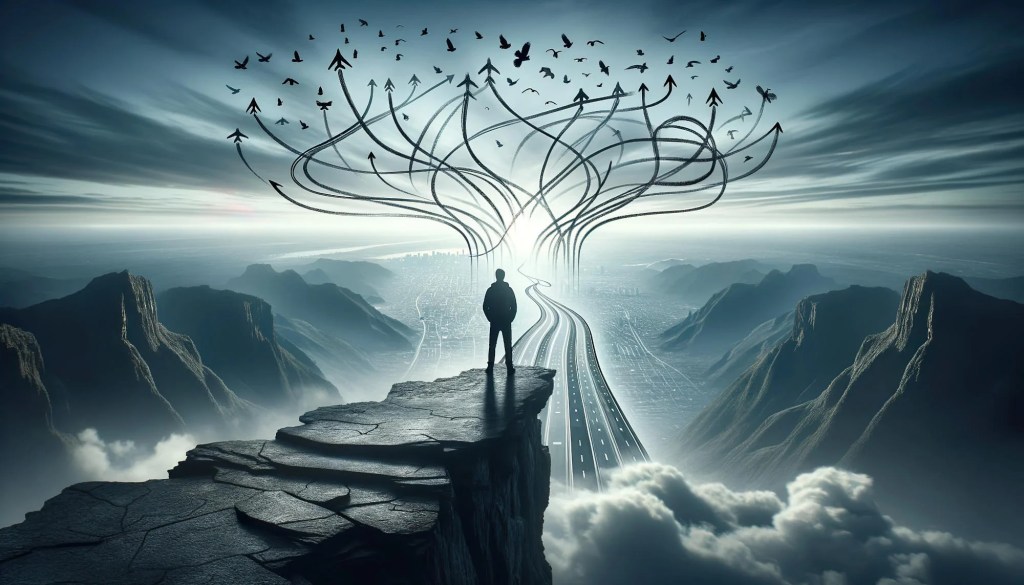
 Inkwellery by Abhi